Getting the Heat Right: Why Custom IR Distribution Matters for Glass R&D
Most infrared lamps are built to be uniform. They spread heat evenly across the board. But if you’re in the middle of R&D, “even” is usually the problem. When you’re messing around with new glass compositions or weird shapes, the way heat moves across the material is everything. That gradient is what decides if your glass comes out perfect or ends up with internal stress that ruins the optical properties.
Stop Settling for “One Size Fits All” Heat
We don’t just tweak the length of the tube and call it a day. That’s not really customization. Real customization is about mapping out exactly where the power goes. By changing how we wind the filament or adjusting the voltage drop in certain sections, we can build “hot zones” and “cool zones” right into a single lamp. Imagine needing a steep heat ramp in the center of your sample, but a slow, gentle soak around the edges. With an off-the-shelf lamp, you’re out of luck. With ours, we just spec the wattage to match that exact profile. You get the freedom to experiment without fighting your hardware.
The Trade-offs (Because Physics is Stubborn)
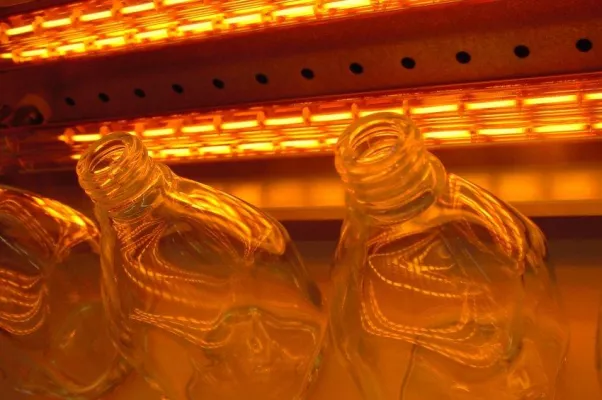
Here’s the thing: when you cram a massive amount of energy into a small footprint, things get hot. Really hot. If we’re pumping 3000W into a short-wave quartz tube to hit your annealing temp fast, your housing is going to feel it. You can’t ignore the reflected radiation. If your cooling fans and heat sinks aren’t up to the task, the heat will build up at the lamp ends and blow the seals. It’s a simple matter of balance.
Making Your Life Easier in the Lab
The best part? Custom power mapping takes the guesswork out of your thermal cycles. You can stop sliding your glass samples back and forth, hunting for that elusive “sweet spot.” Instead, the heat profile is already baked into the lamp. We design these to be drop-in replacements for your current R&D rigs. They fit your existing power supply, but they give you total control over the heat flux. It just works.