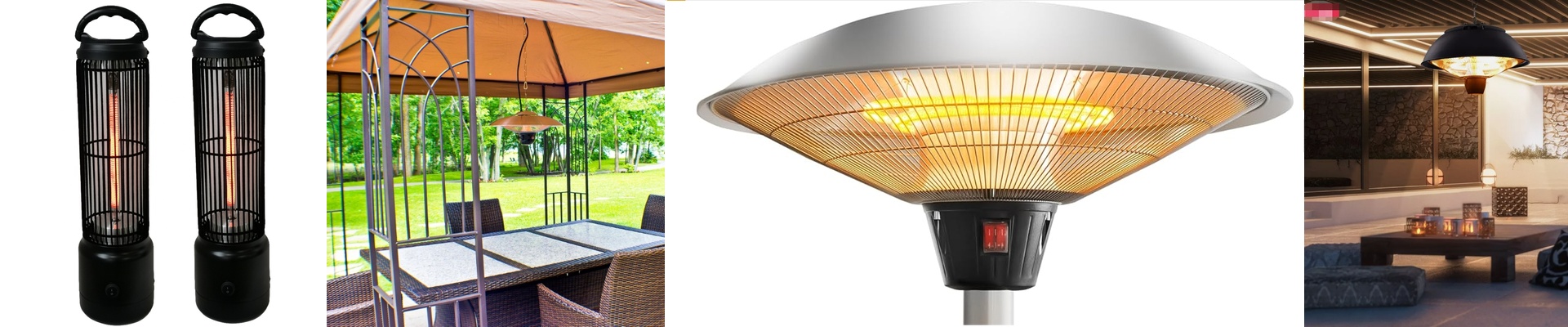
Why Most Outdoor Heaters Actually Fail
If you’re putting infrared heaters in a pergola, you’re basically asking them to survive a war zone. Think about it. You’ve got intense, concentrated heat at the ends of the elements, and then you’ve got rain and humidity trying to sneak in from every angle. Most of the cheap heaters you see on the market fail for one simple reason: the lead-wire seal gives up. Once that sealant cracks, water hits the live terminals. That’s when you get carbon tracking, short circuits, and a heater that’s suddenly a very expensive piece of scrap metal.
The real problem with “cheap” seals
The spot where the wire meets the quartz tube is where everything usually goes wrong. In low-end units, they use basic silicone or some generic glue. The problem is that shortwave lamps go through massive temperature swings. The metal expands, the glass expands at a different rate, and that mechanical stress just rips the seal wide open. It’s like trying to glue two different materials together and then heating them up to a thousand degrees. It’s not going to hold. We do things differently. We use OEM-grade compounds that stay flexible even at 300°C+. When a seal isn’t airtight, oxygen gets in and starts eating away at the copper lead. This creates a high-resistance joint, the terminal starts overheating, and before you know it, the wire insulation is melting. Not a great look.
Why the process is everything
A lot of assembly lines just “slap on” some sealant and call it a day. We use a multi-stage curing process. The goal here is to make the seal bond chemically to the quartz, not just stick to the surface. This stops “capillary action”—which is just a fancy way of saying it stops water from being sucked right into the heater housing. It’s a tough balance. If the seal is too rigid, it’ll crack the first time the weather hits a freeze-thaw cycle. If it’s too soft, the lamp’s own heat will melt it away.
A few things to keep in mind
Better sealing means the terminal assembly takes up a bit more room. You can’t really shrink the housing just to save a few bucks without ruining the protection. Also, if you’re installing high-wattage units for a big space, double-check your wiring gauge. Even the most perfect seal in the world can’t save you if your wires are too thin. Undersized wires get hot, and that heat can actually compromise the waterproof seal from the inside out. Get the wiring right, get the seal right, and your heater will actually last.