The Secret to Glass That Doesn’t Just Shatter
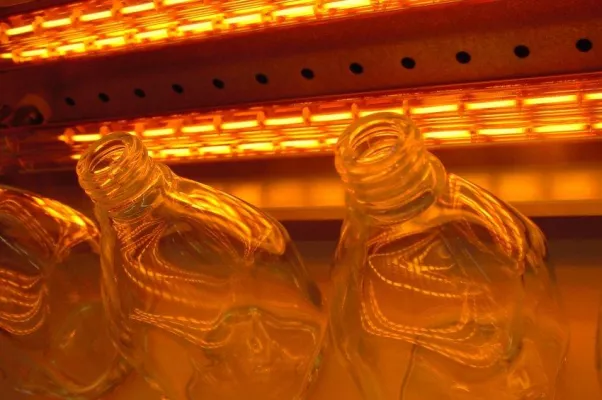
Ever had a piece of lab glassware just… give up on you? One minute it’s fine, the next it’s a pile of shards. Usually, it’s because of internal stress that didn’t get sorted out during cooling. If your temperature swings by even a couple of degrees, you’re playing a dangerous game with stress fractures. That’s why we use infrared (IR) heating elements. We keep things dialed in to within 0.1°C. It keeps the glass right at that annealing point so the molecular structure can actually relax instead of snapping. Why obsess over 0.1°C? Because glass is picky. There’s a tiny window where everything just works. Go too high? Your piece starts to deform. Too low? That stress stays locked inside the glass, waiting for the worst possible moment to let go. We hit that sweet spot by pairing fast-acting IR emitters with PID controllers. They adjust the power on the fly, which stops that annoying “thermal overshoot” you get with those cheap resistive heaters. The magic of IR Think of a standard convection oven—it heats the air, and the air heats the glass. It’s slow. IR is different. It sends energy straight into the glass surface. It’s faster, and the gear takes up way less room in your shop. We stick with short-wave IR because it actually sinks into the glass. You get a deep, uniform soak across the whole vessel, not just a toasted outer skin. A few things to watch out for Now, these systems aren’t a magic wand for every setup. The tighter your tolerance, the more “nervous” the system gets. A stray draft or someone leaving a door open can throw it off. If your lab is breezy, you’ll want to shield the heating zone. Otherwise, the PID loop will spend all its time “hunting”—constantly fighting the cold air—which just wears out your relays. Pro tip: Use solid-state relays (SSRs). They can handle the rapid-fire cycling needed to keep that 0.1°C stability without burning out.