
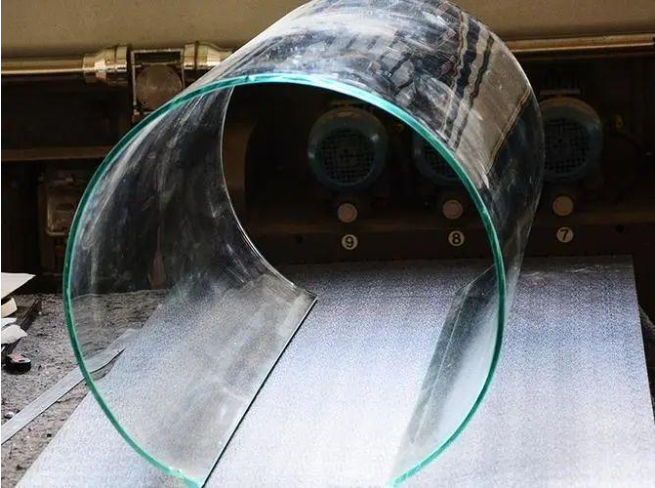
On the glass shop floor, heat isn’t just a setting—it’s the whole process. When the heater lags, the line pays: tempering stress that shows up as spontaneous breakage, bends that drift out of tolerance, lamination that traps bubbles, coatings that cure unevenly. Convection ovens can paper over inconsistency with longer soak times, but in a high-throughput plant, that extra time is money you’re burning. We built electric infrared heaters for factory glass because infrared puts heat where you need it, when you need it, with repeatability you can track. It’s not about “more heat.” It’s about predictable thermal behavior that keeps glass moving at line speed without sacrificing quality for volume.
What matters: performance you can measure
Infrared heating is direct radiation, not hot air. That matters in glass plants where ambient conditions swing and line speeds don’t. Our modules use short-wave quartz emitters tuned for fast response and stable output, and the numbers show up in the control log every shift.
- **Ramp rate:**10–15°C per second from ambient to operating temperature. In practice, that means the heater hits setpoint fast enough to keep up with indexing conveyors and short dwell windows.
- Temperature uniformity:±2°C across the heated zone at steady state. For glass, that tight uniformity cuts the thermal gradients that cause stress marks, optical distortion, and edge defects.
- **Power density:**30–60 W/cm² at the emitter surface, sized to match the heat demand of the product and line speed. We set the active length and power to deliver the required energy without overshoot.
- **Response time:**Full output in under 3 seconds. Fast response shortens changeovers and reduces scrap when you switch products.
- **Control:**Closed-loop with SCR or solid-state power, reading a thermocouple or pyrometer at the glass surface. Output is continuously modulated, not stepped, so the temperature curve follows the recipe.
- **Efficiency:**About 85–92% of electrical input converted to radiant energy. Heat goes straight into the glass and coatings, with minimal wasted energy on air and fixtures. These aren’t abstract specs. They translate into repeatable heating profiles for tempering and bending, consistent cure across lamination stacks, and stable drying for low-emissivity and other coatings.
Why it fits glass: built for the line, by people who live it
Glass processing has specific thermal needs, and infrared meets them because it targets the workpiece, not the room. **Tempering and bending:**You need rapid, uniform heating into the transition region without thermal shock. Infrared gives you high heat flux that penetrates quickly, and the tight uniformity reduces hot spots that leave stress lines. With a 10–15°C/s ramp, the heating section keeps pace with high-speed lines, and the short stabilization window is enough to hold shape consistency. The payoff is fewer rejects from optical distortion and edge cracking. **Lamination (EVA/SGP/PVB):**Lamination quality hinges on hitting the right bond-line temperature across the entire sheet, fast enough to prevent premature flow and trapped gas. Infrared heats the stack surface directly, so the adhesive film reaches flow temperature quickly and evenly. The ±2°C uniformity helps you avoid bubbles and voids, and the fast response makes it practical to run mixed thicknesses with tighter changeovers. **Coating drying and curing:**Low-e and other coatings demand a controlled thermal budget. Infrared delivers energy precisely, and closed-loop control keeps the profile within limits. That means consistent film properties, fewer pinholes, and less rework. **Insulating glass and sealing:**Secondary seals and warm-edge systems need localized heat without cooking the whole assembly. Infrared modules focus heat right where the sealant cures, shortening cycle time and improving adhesion consistency. **Energy and uptime:**Infrared heats the product, not the air, so you stop paying to heat empty oven space. Energy use drops because the heater idles between indices, and the high electrical-to-radiant efficiency lowers kWh per unit. The modular design keeps maintenance practical—swap an emitter or reflector without tearing out the whole oven.
The realities: installation, compatibility, and constraints
Infrared is straightforward, but it has constraints you plan for.
- **Line-of-sight matters.**Infrared is radiant energy. Obstructions cast shadows and create cold spots. Fixtures, conveyors, and spacers need to be designed to minimize shading, or you’ll see localized under-heating.
- **Glass emissivity varies.**Low-e coatings reflect infrared, which can reduce absorbed heat. We size power and wavelength to match the target surface, and we control based on glass surface temperature, not heater temperature, to hold the profile.
- **Thermal mass changes the equation.**Thick glass needs more energy and a different power density than thin glass. The system has to be sized for the heaviest product, or you’ll chase setpoint during thick-to-thin changeovers.
- **Reflectors and alignment affect uniformity.**Reflectors degrade and can drift out of alignment. Schedule periodic checks and keep spare reflector assemblies on hand. A small misalignment shows up as a stripe in the glass.
- **Power and cooling.**These are high-current modules. Plan for proper electrical service, local disconnects, and correct conductor sizing. Depending on power density and duty cycle, some installations need forced air cooling around the emitter housing to keep operation stable.
- **OEM replacement and integration.**We build drop-in emitter assemblies and reflector packages to fit common oven geometries, but the mounting and control interface have to match. Give us your existing machine footprint, mounting points, and control signals, and we’ll deliver a module that installs without modifying the conveyor or guarding. If you run tempering, bending, lamination, coating, or IG sealing, the heating section is where the process is won or lost. Electric infrared heaters give you control you can verify: ramp rate, uniformity, power density, and response time. That control turns into fewer scrap sheets, shorter changeovers, and lower energy use per unit shipped. Tell us your line speed, glass thickness range, and the heating profile you need. We’ll size the electric infrared module to meet it—and show you the data on the shop floor.